 Kenneth Anger (born Kenneth Anglemeyer, 1927, Santa Monica, California) began to make amateur films as a child using the family's 16mm camera and moved rapidly into personal works that explored his interest in myth, magic, and homoeroticism. His first mature film, 1947's Fireworks, caused a sensation and confirmed him in his path as an independent filmmaker. He spent much of his years as a young man in Europe, specifically Paris, returning briefly in the early fifties to make Inauguration of the Pleasure Dome (1954), his first intensive exploration of the mythology of one of his great influences, the English writer-adventurer-mystagogue Aleister Crowley (1875-1947), of whose works and ideas he has made a lifelong study and whose pagan religion, called Thelema, he adopted. He returned to the US in the early sixties and in New York made Scorpio Rising (1964), one of his most sensational and best-known works, after which he moved to San Francisco, where he hobnobbed with figures on the fringes of the sixties counterculture and embarked on his major work Lucifer Rising, a project with many ups and downs which was only finished in 1981. He released no new material for the next two decades, beginning to make new films in 2000. An avid collector of Hollywood gossip, he wrote Hollywood Babylon in 1959, and Hollywood Babylon II in 1986, two books relating the choicest, most scandalous anecdotes of Hollywood stars and directors from the silent era on. This year saw the release by Fantoma of Kenneth Anger: The Complete Magick Lantern Cycle, a two-DVD compilation of his major films which is certain to be the go-to resource for anyone interested in his work.
Fireworks opens
 the first disc of the Magick Lantern Cycle and shows the surrealist influence which was nearly omnipresent among avant-garde film of the time. Anger plays a young man who dreams that he approaches and is beaten and eviscerated by a group of sailors. A brutal sado-erotic fantasy showing the predilection for strong, muscle-bound types that abound in his work, the film also relays a vivid sense of the insecurity that plagued gay men at a time when anyone who dared to act on his desires was subject to police entrapment (something that had already happened to Anger) or violence. The film was reportedly prosecuted for obscenity on its release. A print of the film was purchased by sex researcher Albert Kinsey for the archives of the Institute for Sex Research (now the Kinsey Institute for Research in Sex, Gender, and Reproduction in Bloomington, Indiana), and he and Anger became close friends until Dr. Kinsey's death in 1956. His only other surviving film of the period is 1949's Puce Moment, a scene from a projected, longer homage to the vamps and sirens of the silent era in Hollywood, in which a young woman, apparently a Hollywood celebrity, chooses from her dresses and perfume and sets out with her borzois (an elegant breed of dog fashionable at the time). A fascination with Hollywood -- its artifice, spectacle and glamor, as well as the sleaze and scandal which populates the pages of Hollywood Babylon, and which is also a constant theme in gay culture -- is evident here.
Rabbit's Moon (La L
 une des Lapins, 1950) and Eaux d'Artifice (1953) are the only finished and extant films Anger made during his stay in Europe, during which Anger met French writer and filmmaker Jean Cocteau (also an early admirer of Fireworks) and Henri Langlois, founder of the Cinémathèque Française, who allowed Anger to store materials and to browse the holdings of the cinémathèque. Shot on the unused soundstage of Les Films du Panthéon during the French vacances, Rabbit's Moon was the only film Anger has made in 35mm and is a fabulistic fantasy combining commedia dell' arte figures with a motif from Japanese folklore (Japanese children believe -- much as Western children believe in the man in the moon -- that a rabbit fond of rice cakes lives in the moon, and leave him snacks of rice cakes when the moon is full). The melancholy clown Pierrot offers the moon to the lovely Columbine, who rebuffs him for the wily trickster Harlequin. Shot on a set constructed by Anger, the characters were played by students at Marcel Marceau's school of pantomime. The overall look and feel of the film owes much to Max Reinhardt and William Dieterle's 1935 adaptation of Shakespeare's A Midsummer Night's Dream starring Mickey Rooney, in which Anger claimed later to have appeared as a child actor (a claim which not borne out by archived studio documents). This was followed in 1953 by Eaux d'Artifice, which was originally conceived as part of a larger work on the 16th-century occultist Cardinal d'Este. The film is a visual study of the many fountains and waterfalls in the water gardens of the Villa d'Este in Tivoli in Rome, as a small, masked figure (allegedly a dwarf referred to Anger by the filmmaker Federico Fellini, chosen to make the setting look bigger) in eighteenth-century costume wanders through the gardens. Printed in cyan with hand-tinting in emerald, the film is tranquil, sensual, and delicate. Both these films are possibly Anger's most accessible and easily enjoyable, even if it is true that the water-garden footage was originally intended as a allusion to Cardinal d'Este's alleged sexual fetish for urination.
Anger returned brie
 fly to the United States after shooting Eaux d'Artifice on the occasion of a death in the family, and renewed his ties with the local artistic-bohemian community in Southern California. Invited to a costume party held by artist Renate Druks and her husband Paul Mathiesen with the theme "Come As Your Madness," he conceived the film Inauguration of the Pleasure Dome (1954), and asked some of the other attendees to appear in the film. The film was shot at the home of Samson De Brier, who at one time worked in Hollywood but had since become a recluse noted for his collection of jewelry, curios, Oriental furniture and artworks. In the film a number of figures from the Egyptian and classical pantheons gather and share a magical, vision-inducing potion. De Brier appears in the film in a number of roles, including Osiris, Shiva, Nero, Cagliostro and the Great Beast 666. Others in the cast include Marjorie Cameron, widow of American Crowley disciple Jack Parsons, Curtis Harrington, a boyhood friend of Anger's and a fellow filmmaker who began with experimental works and became a director of low-budget Hollywood films such as Queen of Blood, the novelist and diarist Anaïs Nin as the moon goddess Astarte (and whose account of the original party and impressions of Anger can be found in the published version of her diaries), and Anger himself as the Greek goddess Hekate, who brings the hallucinogenic brew. With a visual sense influenced by Art Nouveau design and glowing Kodachrome greens, reds and yellows, the film's images sometimes border on kitsch (I tend to hear Les Baxter rather than the Janacek the filmmaker chose for the soundtrack), but the imagery is also well thought-out and well paced and represents Anger's first successful attempt to convey in film the Crowleyan mythology he had been studying as well as Crowley's emphasis on spritual exploration through drug-induced trances and sexuality. Inauguration also pioneers cinematic psychedelia with its heavy use of multiple superimpositions. The film was praised and won prizes in Europe, and he would prepare a special three-screen version for the 1958 Brussels World Fair, as well as a "Sacred Mushroom Edition (intended to be experienced under the influence of hallucinogenics) in 1966.
 Anger returned to the US in the early sixties, and his vision became less surreal and precious, and more harder-edged and montage-oriented. Probably Anger's best known and most popular film, Scorpio Rising (1964) follows the lives of a loose group of motorcycle enthusiasts he found hanging out under the roller coaster at Coney Island in New York City. He filmed them working on their bikes, preening, fooling around at an impromptu beer-blast, and racing at a bike rally where one of the competitors wiped out on his bike, fatally breaking his neck in front of Anger's camera. He embellished the verité portions of his footage with Nazi iconography, images from popular culture alluding to death and rebellion, footage of a cheap religious film of the life of Jesus Christ that had been mistakenly been delivered to his doorstep and which he incorporated into the film, and Tom Of Finland-esque images of muscular bikers in black leather. He particularly followed one of these bikers, a blond, speed-snorting, comics-reading, James Dean-obsessed ex-marine named Richard McAuley, or Bruce Byron, depending on who you believe, but who was called Scorpio after his astrological sign (a sign referring both to the sex organs and to machinery), as he primps, goes out, and harangues, Nazi-style, an imaginary audience in a derelict church. Set to a soundtrack of pop songs by artists such as Bobby Vinton and Peggy March, the film builds, montage-style, a vision of youth culture as a gathering force with the potential to overturn the old Christian order. By any standard, Scorpio Rising was a sensational film: if Fireworks made some people take notice, and Inauguration of the Pleasure Dome garnered accolades, then Scorpio Rising made Anger an out-and-out celebrity in the world of underground film and in the rising counterculture of the sixties. He moved to San Francisco where he made Kustom Kar Kommandos (1965), a film initially conceived as something of a Scorpio for the custom car culture, but which ended up as a three-minute film of a young man polishing his hand-built dragster, set, like Scorpio, to a popular song (the Paris Sisters' "Dream Lover"), with equal fetishistic attention given to both his tight jeans and the powerful, exquisitely crafted machine he has built.
In San Francisco Anger networked with the counterculture forming in the area, performed public rituals at the Straight Theater, and began to conceive a new film, Lucifer Rising, a film intended to evoke the god Lucifer, not the Devil of Christian mythology but a being of light and beauty heralding a sort of millenial period called "the Aeon of Horus" by Crowley. Believing that the person who would play Lucifer in his film must be a living embodiment of Lucifer, he at first thought he found his Lucifer in a struggling young musician, Bobby Beausoleil, who agreed to appear in the film on the condition that he be allowed to form a group to record the film's soundtrack. The relationship between the two men resulted in a falling-out, after which Beausoleil became involved with Charles Manson and his "Family," and went to prison after carrying out a murder at Manson's bidding. Anger went to London in 1968, where he met the Rolling Stones' Mick Jagger and Keith Richards, and Led Zeppelin's Jimmy Page, who was also interested in Crowley. He used much of the footage he had shot for Lucifer Rising, as well as footage shot in Lond
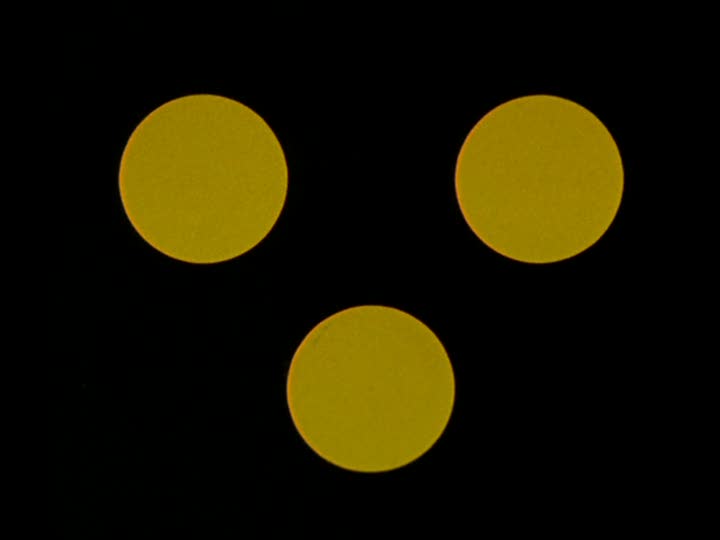
 on, for Invocation Of My Demon Brother (1969). Set to a soundtrack improvised by Mick Jagger on a recently-acquired Moog synthesizer, Invocation is a twelve-minute montage of ritual, arcane symbols, footage of Jagger, Richards and Richards' girlfriend Anita Pallenberg, and young men sleeping and wrestling, all running past the viewer as quickly and furiously as a tab of DMT, ending with a joke uncharacteristic of Anger as a dressed-up lawn jockey holds a sign: "Zap You're pregnant That's witchcraft", and all bracketed by three circles arranged in a triangle, first pointing upward, then pointing downward as though to mark the close of the ritual; Anger has always considered his films to be magical invocations; he has been quoted comparing making a film -- any film -- to casting a spell, and he has also referred to cinema as his own "magickal weapon."
Meanwhile Anger
 still intended to make Lucifer Rising, and managed to obtain a grant of £15,000 from the British National Film Finance Corporation, which enabled him to shoot scenes in Egypt and in Germany as well as in Britain. He initially wanted Mick Jagger to play the part of Lucifer but eventually found a young steel-worker named Leslie Huggins to play the part. After initially enlisting Jimmy Page to record the soundtrack, the two men had a quarrel and Anger decided not to use Page's music, and Bobby Beausoleil, now serving his time in prison, and with whom Anger had reconciled in the meantime, wrote and recorded a progressive-rock soundtrack with the help of fellow inmates and an advance for equipment from Anger. The film opens with Isis and her consort Osiris; we also see Lilith, played by Marianne Faithfull, and an adept played by a Canadian biker named Hayden Couts, and Anger himself plays the Magus, abolishing Chaos (played by a dotty old man named Sir Francis Rose, once a Crowley associate) from the magic circle, all cut with footage of volcanoes erupting and images of Huggins as Lucifer in a rainbow-colored jacket. Here my grasp of the esoteric symbolism fails me, but the film flows with a stately pace and shows what Anger could do with a real budget (large enough to make a small indie feature). Special effects such as a flaming opening title and flying saucers appearing over one of the giant Egyptian monuments appearing in the film (something which Anger claims actually did happen during the shoot and which he took as a sign) were supplied, gratis, by Wally Veevers, who was a member of Stanley Kubrick's special-effects crew in 2001: A Space Odyssey. Osiris was played by Donald Cammell, who directed Jagger and Anita Pallenberg in the film Performance.
Lucifer Rising was shot around 1970 and was only completed in 1981. He came out of his period of retirement from filmmaking in 2000 and has made a number of shorts over the past decade, one of which, The Man We Want To Hang (2002), a short documentary of an exhibition of Crowley's paintings and drawings, is included on The Complete Magick Lantern Cycle.
Anger, now 83, lives in Los Angeles, a proud (often to the point of vanity) and mercurial (sometimes to the point of malice) and fiercely independent artist who has stuck to his guns and his own vision over six decades. He has also prepared but not published (due to a section on Tom Cruise and the notoriously litigous Church of Scientology) a third volume of Hollywood Babylon. His official website can be seen here.
In addition to the major works of Anger's career (all digitally restored) and the more recent film The Man
 We Want To Hang, Fantoma's two-DVD set of Kenneth Anger: The Complete Magick Lantern Cycle includes commentary on all films by the filmmaker, in addition to an alternate soundtrack to Invocation of My Demon Brother (using recordings made by the band Bobby Beausoleil assembled for the original version of Lucifer Rising), restoration demonstrations, and a booklet featuring appreciations by directors Martin Scorsese, Guy Maddin, and Gus Van Sant, along with an account by Bobby Beausoleil of his relationship with Anger and the recording of the Lucifer Rising soundtrack.


